
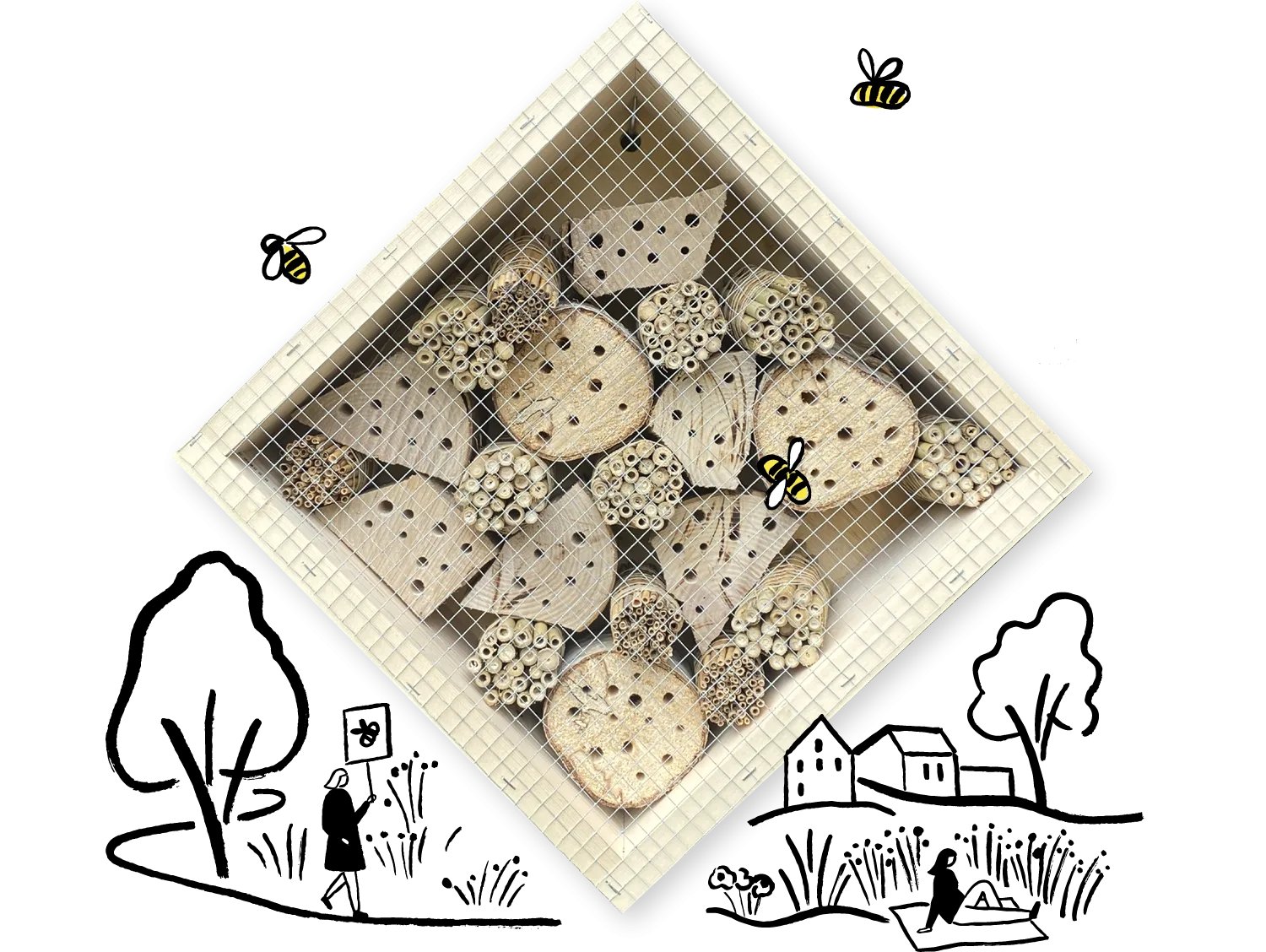
Ready to help save the bees?
Did you know that apart from our beloved honey bees that live socially in colonies, there are approximately 350 species of solitary bees in Belgium? These wild bees play an essential role in pollinating our crops and our daily food, which is why it is crucial that we protect them too.
Fallen trees and dead wood, hollowed out by beetles and fungi, have been ideal nesting places for solitary bees for centuries. Now that these natural habitats are disappearing and wild bee populations are declining, it's time to take action.
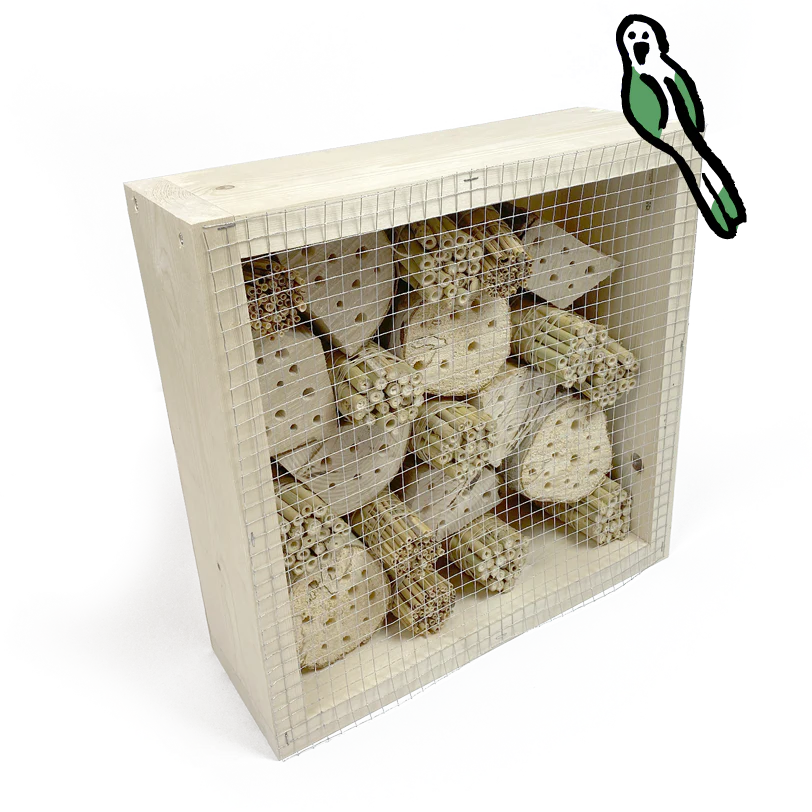
A Bee-N-Bee bee hotel helps wild bees get through the winter and provides them with shelter from the elements and a safe place to lay their eggs. The perfect guests for home, school, the park or your business.
What you need
- a wooden plank, ± 15 cm wide
- nails or screws
- a saw
- a hammer
- a drill
- drill bits (⌀ 4, 6 and 10mm)
- hollow stems: bamboo sticks cut to a length of ± 10 cm
- 7-8 dried wood blocks, with a length of ± 10 cm
- natural rope
- plywood (... x ... cm)
- wire mesh (... x ... cm)

Step 1
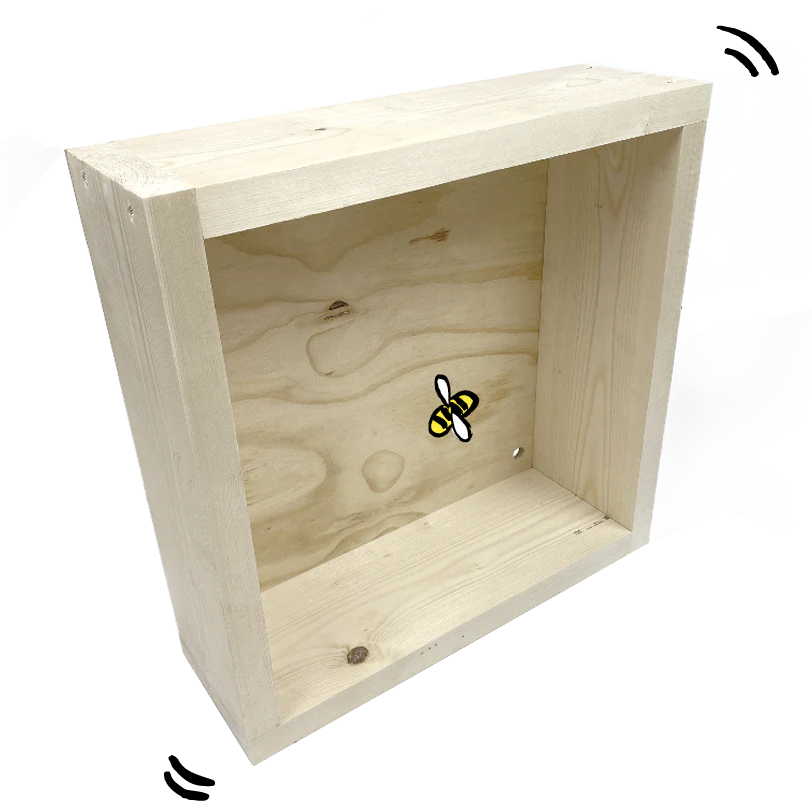
Cut your plank into 4 equal pieces according to these measurements:
- length: 30 cm (max. 60 cm)
- width: 15 cm (min. 10 cm, max. 20 cm)
- thickness of the plank: ± 3 cm
Tip: if you want to use a length of more than 30 cm, we recommend adding a diagonal subdivision to your square for extra stability.
Step 2
Step 3
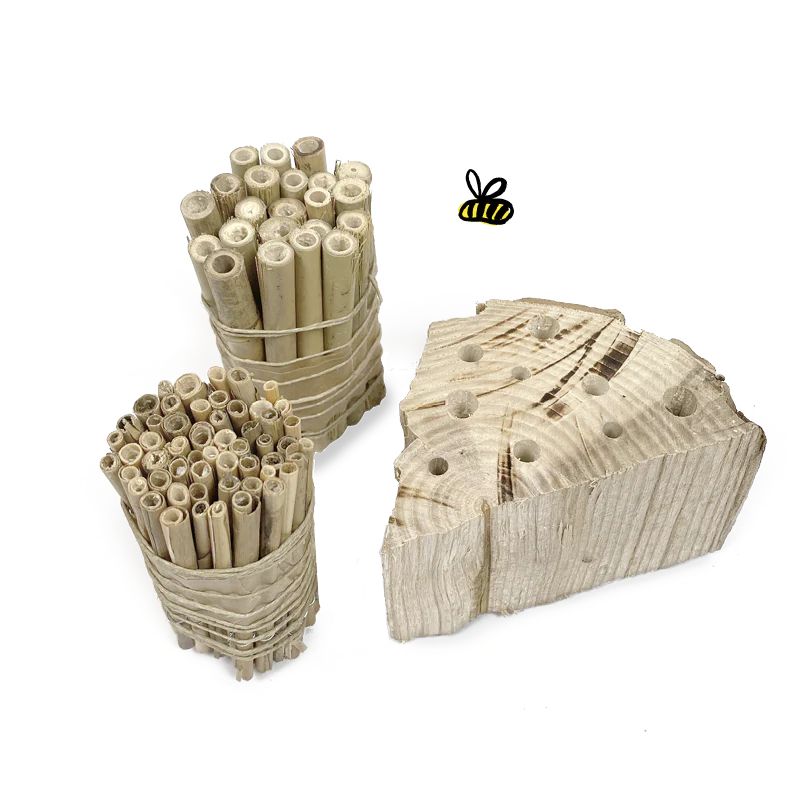
Drill holes (⌀ 4, 6, 10mm) in the dried wood blocks. Drill as deep as possible without drilling all the way through the block. By using different diameter sizes, your bee hotel can accommodate different bee species and sizes. Tip: make sure the drill holes are smooth so they don't damage the bees' wings.
Bundle your stems into tight bundles (± 5 cm diameter) and secure them with rope. Tip: saw off the bamboo just after a knot, so the end is closed. If there are multiple knots in the middle, drill them open.
Step 4
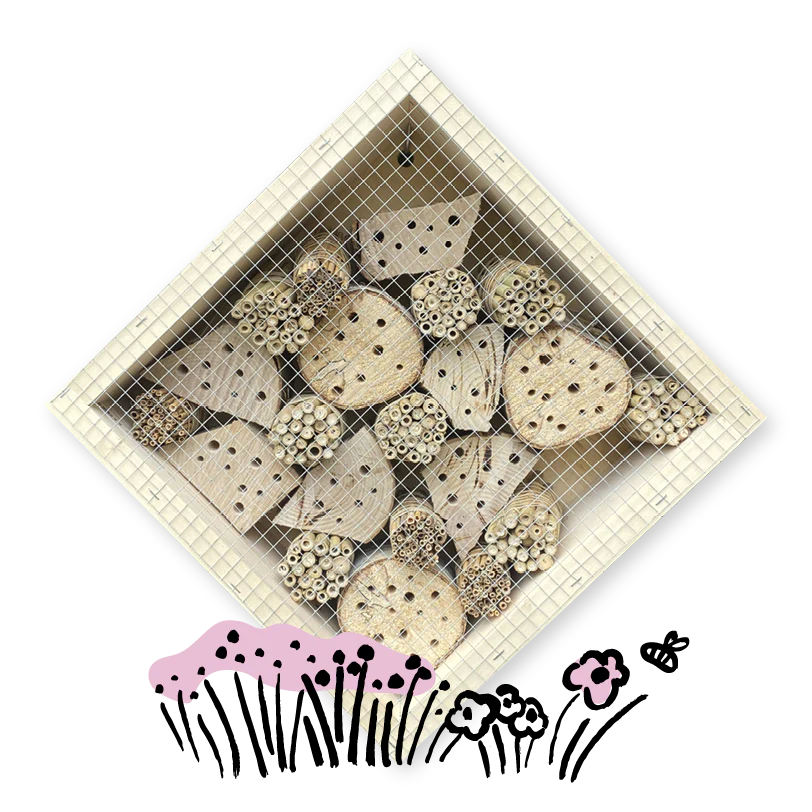
Fill your Bee-N-Bee, alternating between wood blocks and stem bundles so everything is tight and compact. Optional: attach a wire mesh over the front to keep unwanted guests out. Birds love to eat our little bee friends.
Step 5
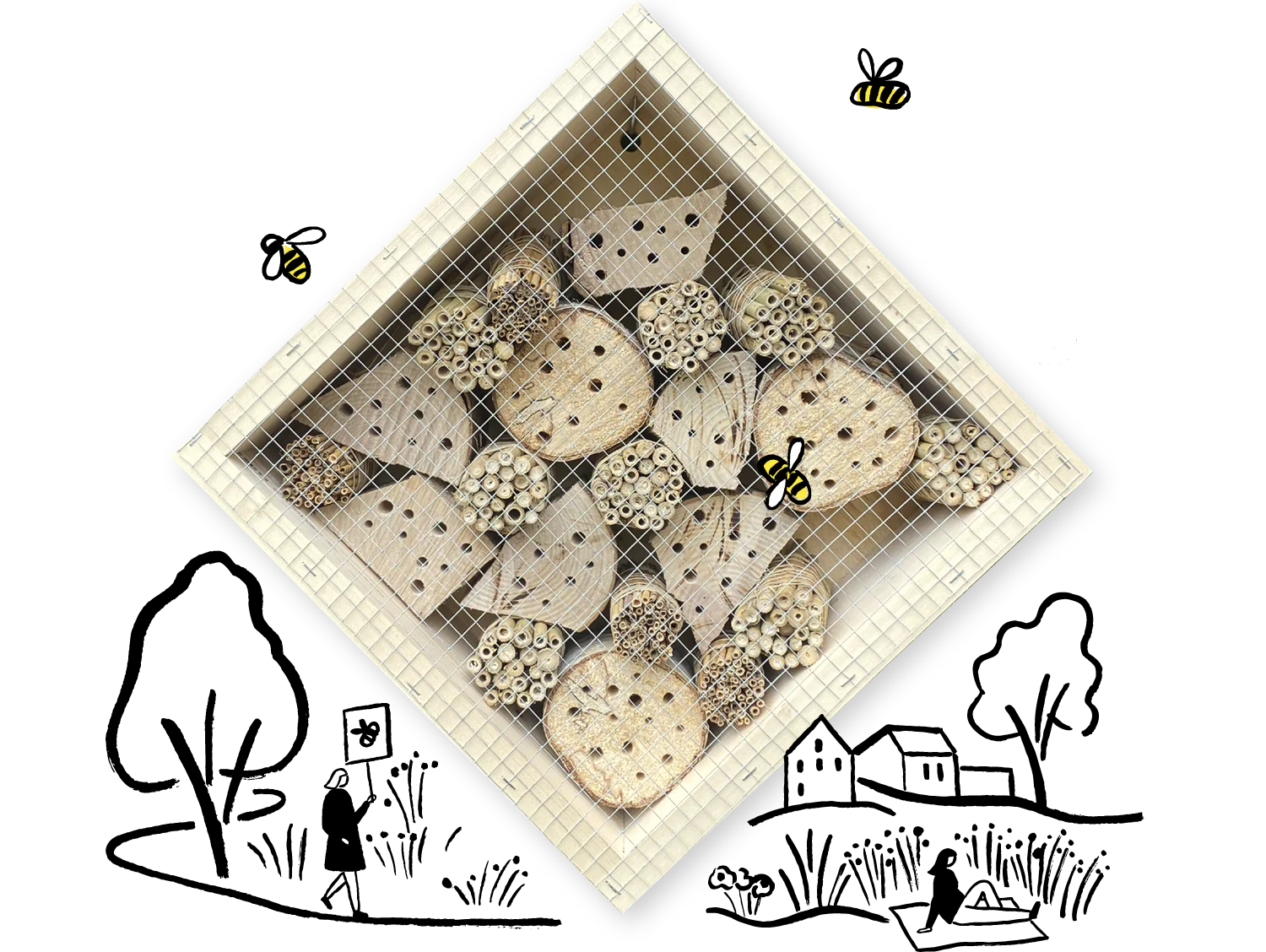
Mount your Bee-N-Bee as a diamond shape, in a dry and rain-free location, facing south, at a height of 50-200 cm. Provide different flower types with staggered flowering periods within a radius of 100m of your hotel, for a nectar and pollen-rich environment for your guests. Nesting material such as sand and clay is also ideal nearby, as it helps bees seal their brood cells.
Looking for something simpler?
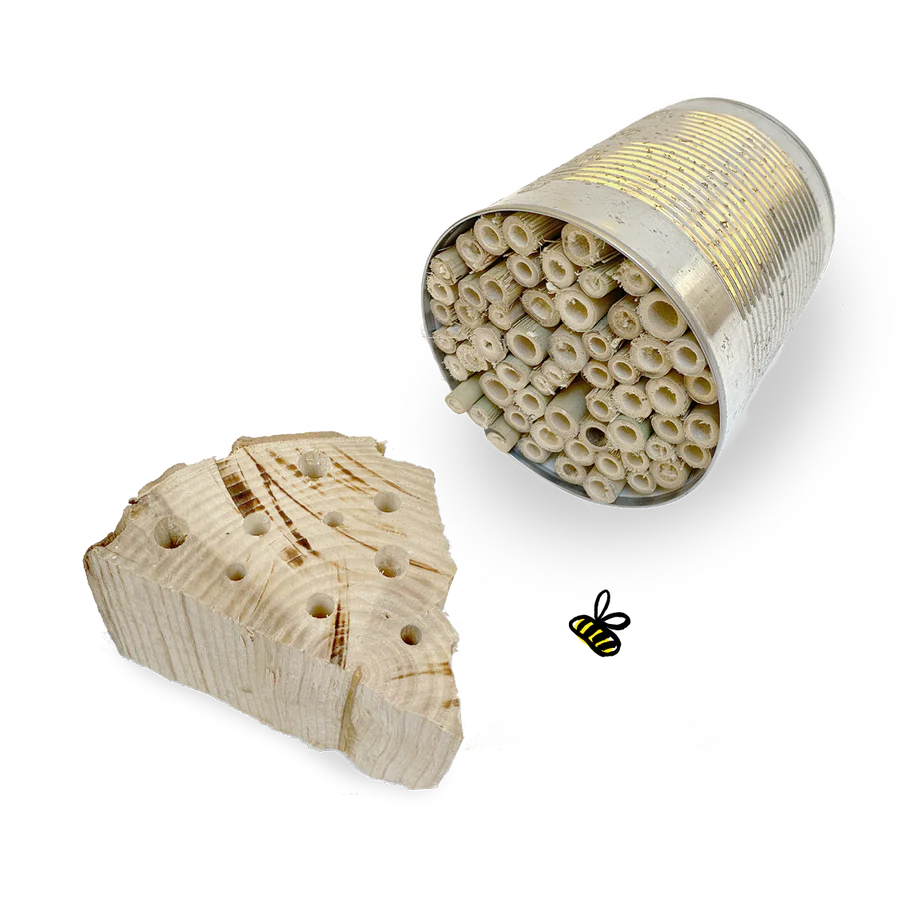
Skip the frame. Drill holes in the dried wood blocks. Take an empty can (with a closed bottom) and fill it with hollow stems until everything is tight. Place the blocks and the can in a dry and rain-free location, facing south.

Other insects enjoy it too!
The drilled wood blocks are especially interesting for wild bees. If you want to attract a wider range of insects, such as ladybugs, earwigs and ants, you can add the following elements to your hotel: pine cones, straw, wood wool, bark and brick.
Get your bee-friendly flower seeds
Complete your bee hotel with a bee-friendly garden