
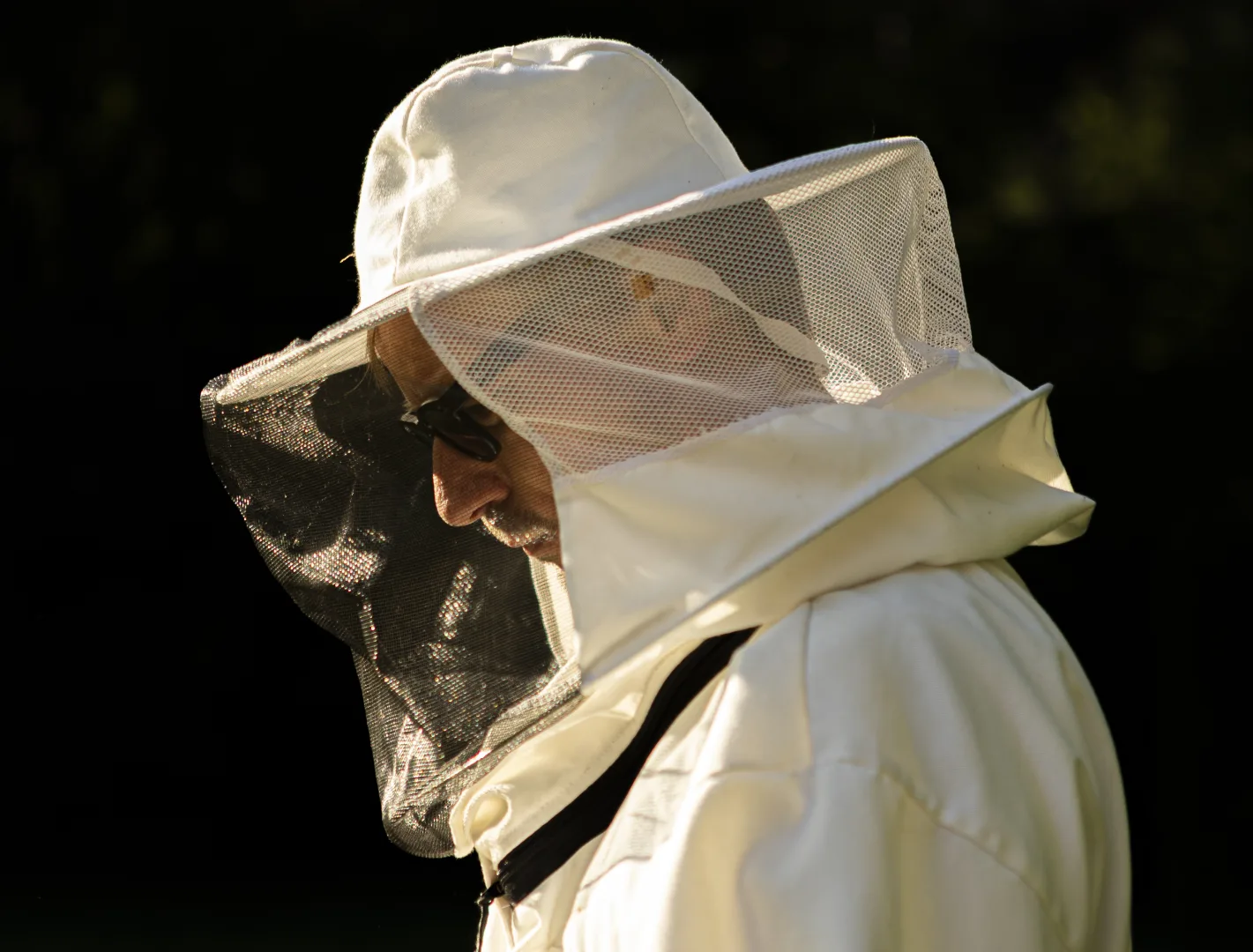
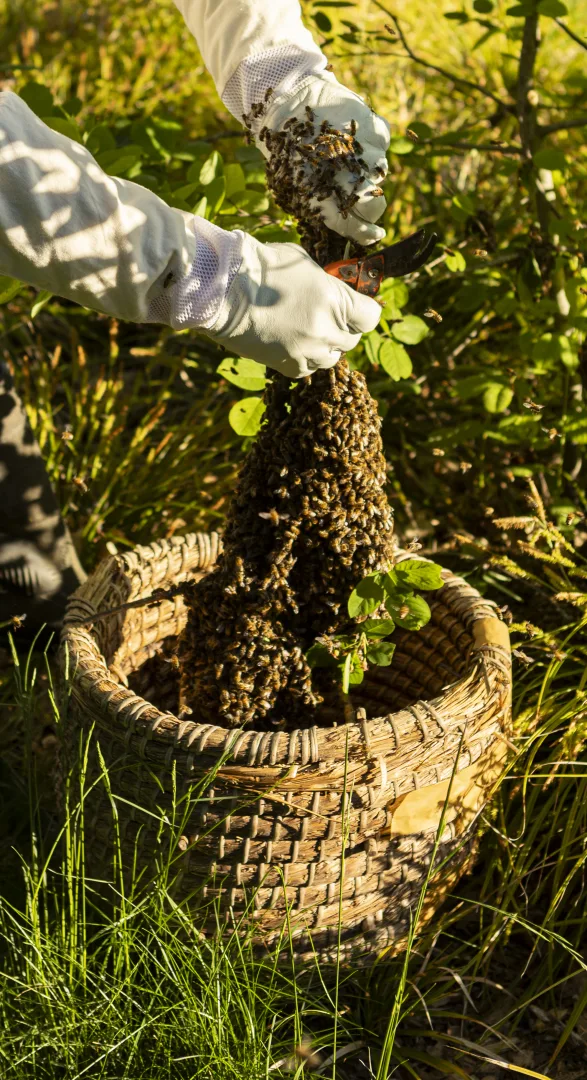
Bart with the beekeepers
Beekeeping is rarely done alone. Every beekeeper develops their own specialization over time. Some breed queens or raise colonies for fellow beekeepers. Others focus on comb honey or queen rearing. There are also beekeepers who teach, dedicate themselves to combating hornets, conduct research or make artisanal products.
And then there are beekeepers who consciously stay small, with one or a few hives. Often that's the purest enjoyment.
Throughout his beekeeping career, Bart has trained quite a few beekeepers. He gives lectures and regularly works with fellow beekeepers. That only makes it more beautiful.
Behind every hive lies a passionate beekeeper.
Want to be part of our network? Are you looking for a local beekeeper? Be sure to visit our website echteimkerhoning.be .
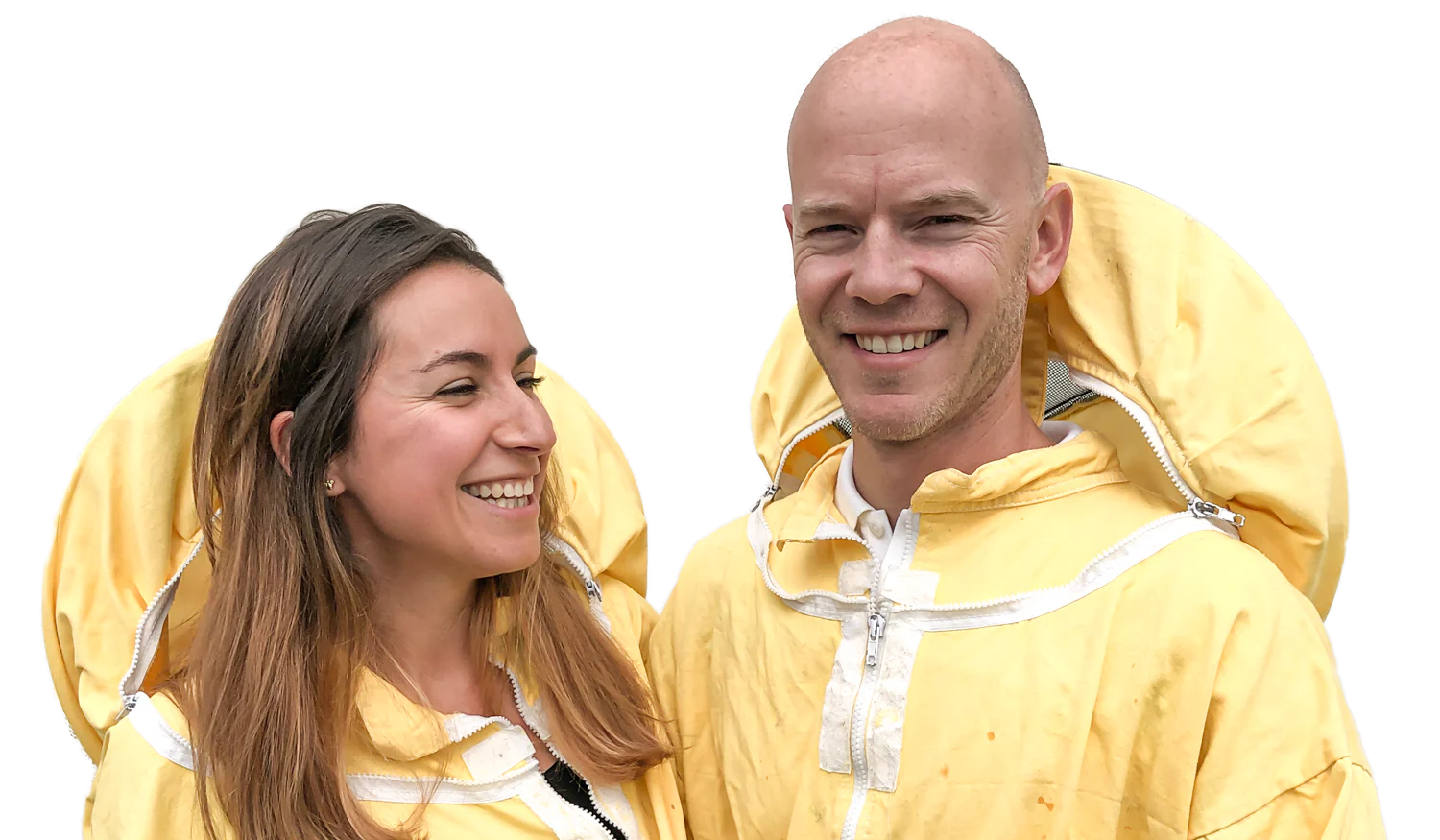
A chat with Banu & Fred
Our beloved strong drinks contain 100% pure honey from beekeepers who care for their bees with passion. We'd like to introduce you to the power duo behind Zomergemse Zeem: Banu and Fred De Kneef.
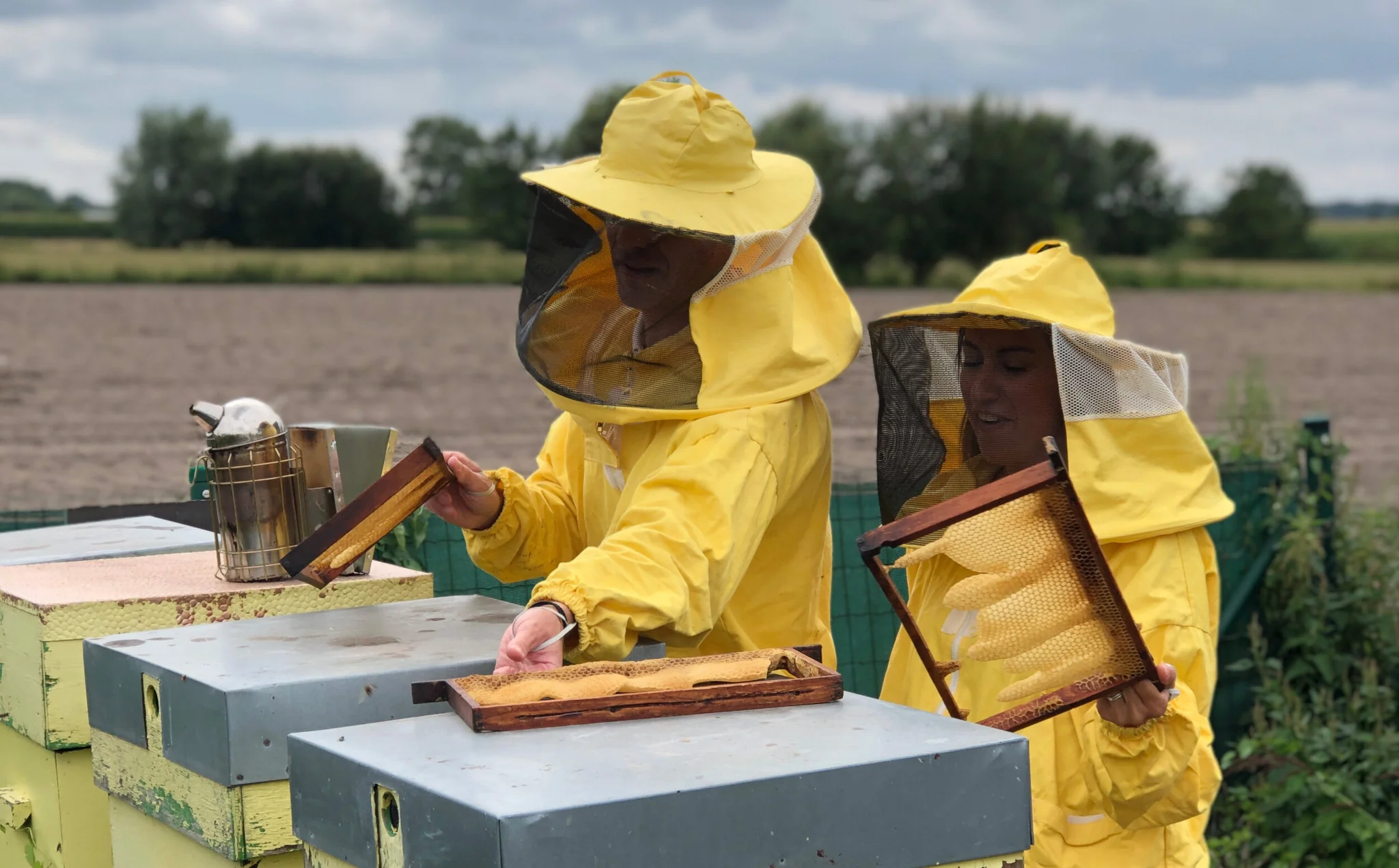
When did you start beekeeping? We – and my husband in particular – have always been fascinated by bees, but we initially didn't have the means to start our own hive. It wasn't until about five years ago when we moved to Zomergem and had more space that we seriously considered it. When we discovered that another beekeeper in our area was quitting, we decided it was time to go for it. My husband Fred then took a beekeeping course. In the meantime, our children have grown up with beekeeping and they're used to us talking about it at the kitchen table.
What's the meaning behind your name, 'Zomergemse Zeem'? "First of all, 'Zomergem' refers to the place where we live and keep our bees. And 'zeem' is the local dialect for 'honey'. People here say: 'A jar of zeem for me'. Both are connected to our specific region in their own way."
Let's talk about your colony. How many bees/hives do you have? "We currently have four production hives that we use for harvesting. We also have five smaller hives that are not used for harvesting, but serve as reserves in case something goes wrong in one of the larger hives, such as the loss of a queen."
How would you describe your honey harvest? "Well, a wonderful taste in general. (laughs) There's definitely a difference between spring and summer honey. Spring honey is lighter in color because the nectar comes from blooming fruit trees, while summer honey comes from other blooming plants like lavender, which makes it darker, sweeter and somewhat stronger. But they both have a floral taste."
What's the best way for you to eat honey?
Personally, I like to eat it with a piece of brie, as an appetizer. The kids like to drink it with a lukewarm glass of milk, in the morning or just before bedtime. And Fred likes to eat it pure: straight from the honey jar. (laughs)
What's your favorite aspect of being a beekeeper?
I love that you do something that's not ordinary, but at the same time very close to nature. The buzzing of bees is incredibly calming, making it a very relaxing hobby, almost like yoga. Bees are actually very romantic creatures when you get to know them better. They really love their queen and are completely devoted to her.
What's an interesting fact about bees you can share with us?
Perhaps that, despite bees being the most studied animals in the animal kingdom, we still know very little about them. They remain quite mysterious!